

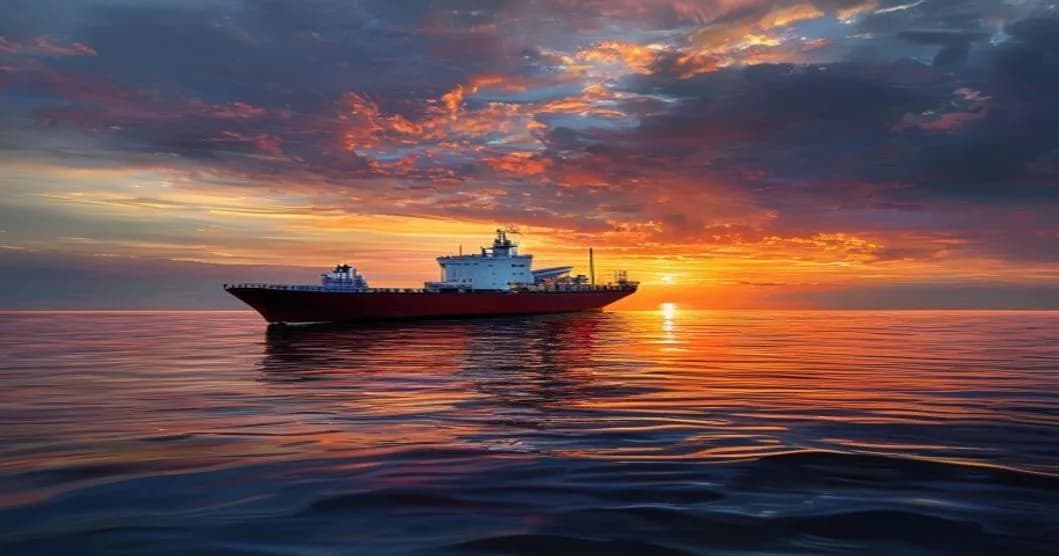
Middle Eastern Liquefied Natural Gas (LNG) to Asia: Export Growth That Changes Everything
The key fact that changes everything: Adnoc has exported a new liquefied natural gas (LNG) tanker to India, adding to recent increases in energy flows through the Strait of Hormuz.
A tanker from Abu Dhabi National Oil Co. (Adnoc) has departed the Strait of Hormuz, adding to recent increases in energy flows through the strategic strait, according to a Bloomberg report.
The liquefied natural gas (LNG) tanker was shipped to India, fitting into a broader trend of increasing Middle Eastern exports of liquefied natural gas (LNG) to Asia, Bloomberg reported.
The Strait of Hormuz, separating Iran from Saudi Arabia, is a crucial passage for energy exports, and increased flows through this strait can have significant implications for oil and gas prices.
UN data shows that Middle Eastern exports of liquefied natural gas (LNG) to Asia increased by 25% in 2025 compared to the previous year, according to Bloomberg.
Liquefied natural gas (LNG) is an important energy source for many countries, particularly for India, which has growing energy needs.
Exports of liquefied natural gas (LNG) from the Middle East to Asia are a key factor in global energy security, and increases in these exports can have significant implications for oil and gas prices.
Bloomberg indicated that LNG prices to Asia rose by 15% in 2025 compared to the previous year due to increased Middle Eastern exports of liquefied natural gas (LNG).
Liquefied natural gas (LNG) is exported in the form of tankers, which are containers filled with liquefied natural gas (LNG). These tankers are shipped by sea to importing countries, which use them to power their electricity plants or heat their homes.
Liquefied natural gas (LNG) is an important energy source for many countries, particularly for India, which has growing energy needs.
Exports of liquefied natural gas (LNG) from the Middle East to Asia are a key factor in global energy security, and increases in these exports can have significant implications for oil and gas prices.
Liquefied natural gas (LNG) prices to Asia rose by 15% in 2025 compared to the previous year due to increased Middle Eastern exports of liquefied natural gas (LNG), according to Bloomberg.
The Economic Mechanism at Play
Exports of liquefied natural gas (LNG) from the Middle East to Asia are an example of international trade. Gas-producing countries, such as Saudi Arabia and the United Arab Emirates, export their production to importing countries like India and China.
These commercial transactions are governed by market laws, which determine LNG prices based on supply and demand. When the supply of liquefied natural gas (LNG) is low relative to demand, prices rise.
Liquefied natural gas (LNG) prices to Asia rose by 15% in 2025 compared to the previous year due to increased Middle Eastern exports of liquefied natural gas (LNG). This has significant consequences for importing countries, which must pay more for this energy resource.